Each day, for every three minutes in American schools, there is a hidden epidemic: a student vapes. Public health experts consider teenage vaping a full blown crisis. According to CDC, over 40% of highschool students and over 80% of middle schoolers had tried electronic cigarettes. They are largely nicotine-based (99%). Nicotine is a drug that can be addictive and could alter the brain’s wiring, and it’s often the primary reason people start smoking cigarettes. Teachers, parents and administrators face mounting pressure to be proactive. Vape detectors are a sophisticated technology that is rapidly becoming an essential part of every campus. Triton, and 3D Sense are the two most sophisticated vape detectors schools can employ. They can do more than sound an alarm.
How do Vape Detectors Perform: Accuracy without intrusion
Modern smoke detectors for vapes such as the Triton ULTRA Safety Sensor doesn’t rely upon recording or cameras to guarantee the highest level of privacy and providing actionable intelligence. Instead, it uses sophisticated particulate sensors to analyse the air in real-time. It sends out alerts to staff via email or text when vape aerosols, or masking agents, such as strong perfumes, are detected. False-positives are very minimal. Administrators can be assured that all notifications need immediate attention.
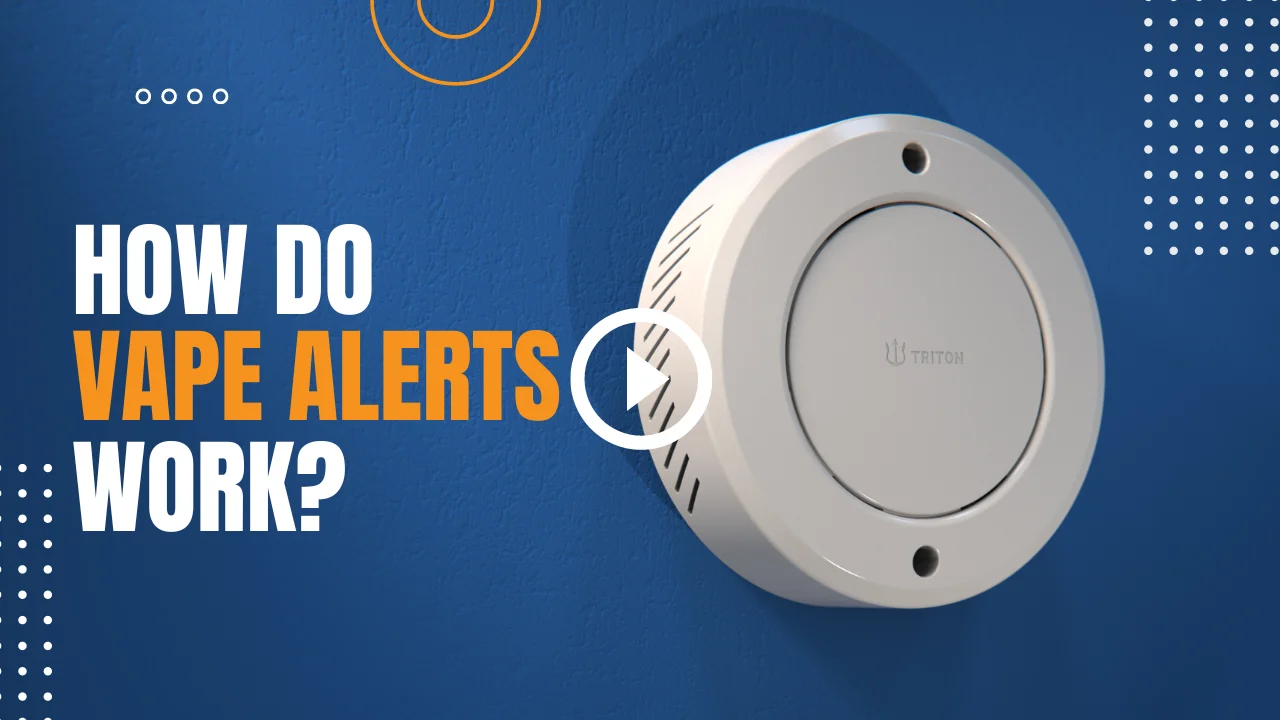
One unit covers a complete room’s bathroom, locker room or hallway, which makes deployment affordable. After five weeks of installation, Triton customers typically report an increase in vaping incidents. What’s the reason? Data-driven deterrence. The Triton Cloud Dashboard displays “hotspots” areas where smoking is most frequent and at what time. Principals can send hall monitors and security personnel in the areas where they’re needed.
Beyond Detection, Occupancy Visualization and Loitering Control
Triton is different from basic vape detectors due to its patent-pending technology for visualising occupancy. The ULTRA Sensor measures the duration of a dwell without capturing any sound or images. Administrators can view heat maps containing colored codes that highlight when bathrooms become social spaces, the most popular places for smoking e-cigarettes, as well as prolonged contact that spreads respiratory illnesses.
Stanford Medicine’s research highlights the importance of this issue: Students who vape have a five-fold increased risk of contracting COVID-19. Vape detectors can improve the air quality in schools by reducing crowds. This decreases the risk of transmission of all airborne pathogens. Following the outbreak they have become indispensable due to their dual benefits.
Transforming Data into Discipline & Dialogue
The numbers tell an interesting story. Triton Reports module collates quantitative information on the timestamps of incidents. The locations, as well as frequency changes. This data is provided to school boards. Parent groups. Even students themselves. When a campus shows a 60% reduction in detections following the rollout of detectors, skepticism fades. Parents will be able to see that the students are committed and are also aware of the implications.
Teachers can increase the impact of their message by making public announcements about the presence of smoking detectors for vapes as early as the first day. 3D Sense, for example, markets itself explicitly as an anti-smoking device. “Let students know the air itself is watching,” guidance materials advise. Peer accountability is the next stage: The social cost of triggering an alarm often proves to be more effective than the lecture.
A Multi-Front Strategy Schools Can’t Ignore
Vape detectors won’t stop people from smoking on their own, however they’re an integral part of a comprehensive solution.
Monitoring – Real-time alerts identify instances that are currently in progress.
Education – Evidence-based research fuels curricula that discourage smoking.
Deterrence- Signage with known consequences can shift behavior.
Discipline – Hotspot data justifies targeted enforcement.
Support – Schools pair detectors with cessation services to help struggling students.
The CDC states that turning around this trend requires “buy-in” from educators, parents, and society. Vape detectors provide the missing link, instant, objective feedback that can transform good intentions into concrete results.
Simple Installation
Triton Cloud Dashboard allows you to sign up devices in only a few minutes. Administrators can add contacts, customize notifications, and set alert thresholds. Set up a demonstration to test the ease of use.
Conclusion
Every puff you don’t pay attention to could result in addiction for a lifetime. Every bathroom incident that isn’t detected poses danger to your health and safety. Vape detectors for schools like Triton and 3D Sense offer more than surveillance they deliver intelligence, deterrence, and proof of progress. Campuses who install them aren’t just reacting to the rising vaping menace; they are regaining control.
These devices transform nebulous fears into tangible victories. With just one sensor per room and information about occupancy privacy these tools can alleviate vague concerns into concrete victories. In a time when 40 percent of high schoolers have already made the switch and middle-school numbers are rising every day, putting off the decision is no longer an option. The air that you breathe has evidence, make sure you’re the first to be aware of what it’s saying.